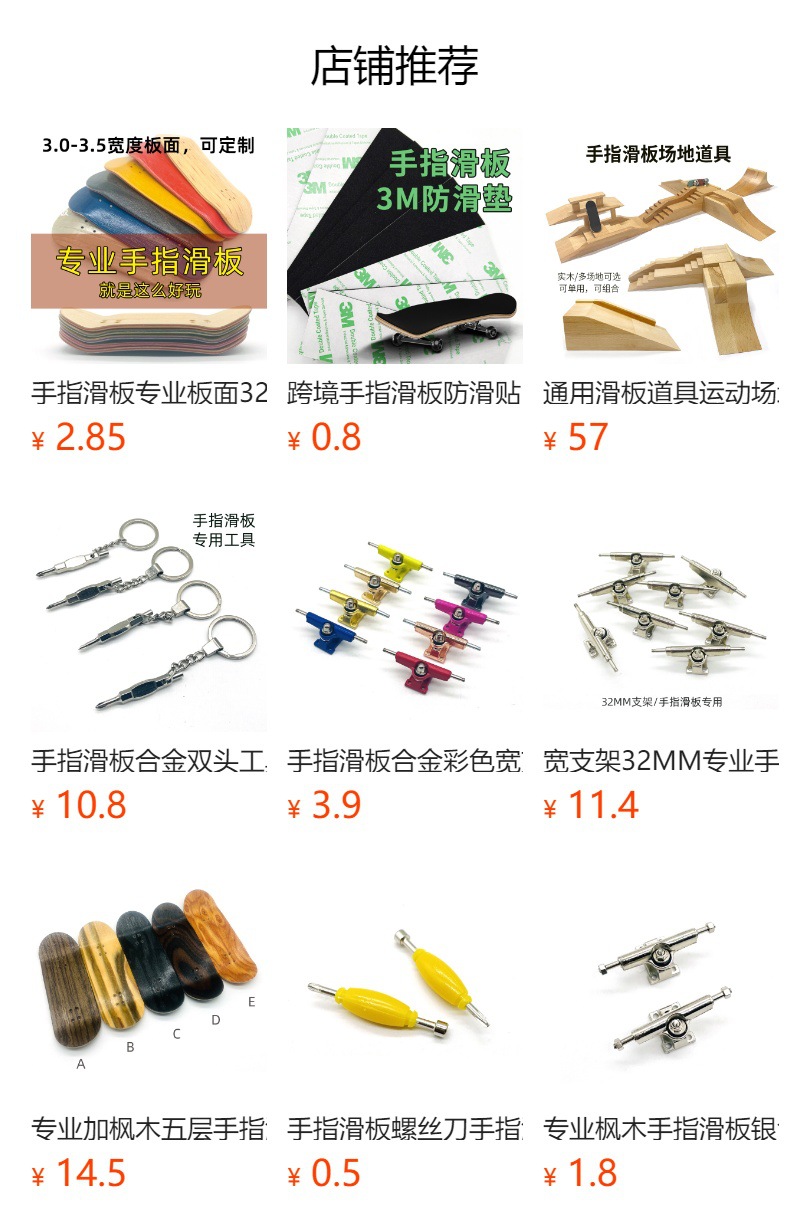
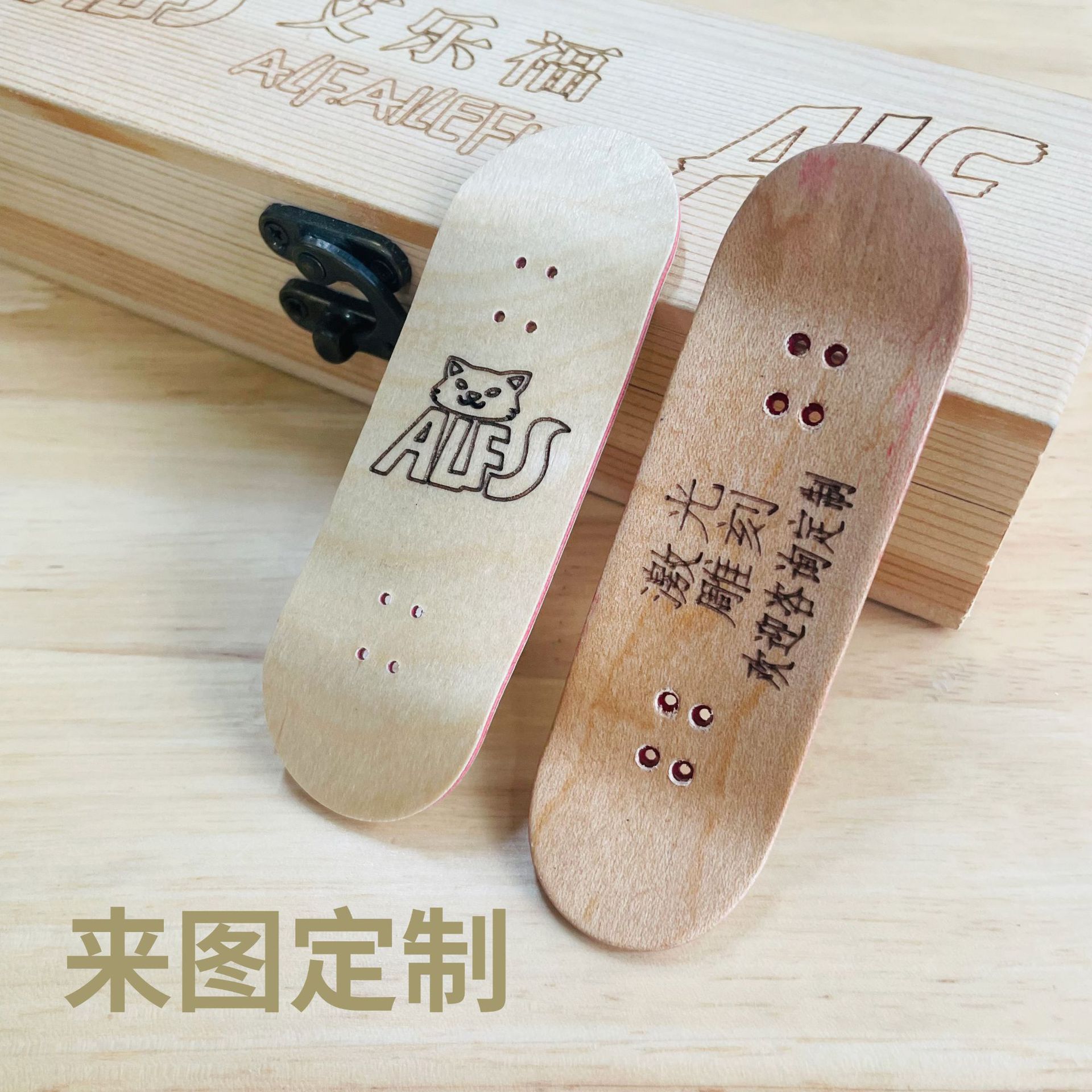
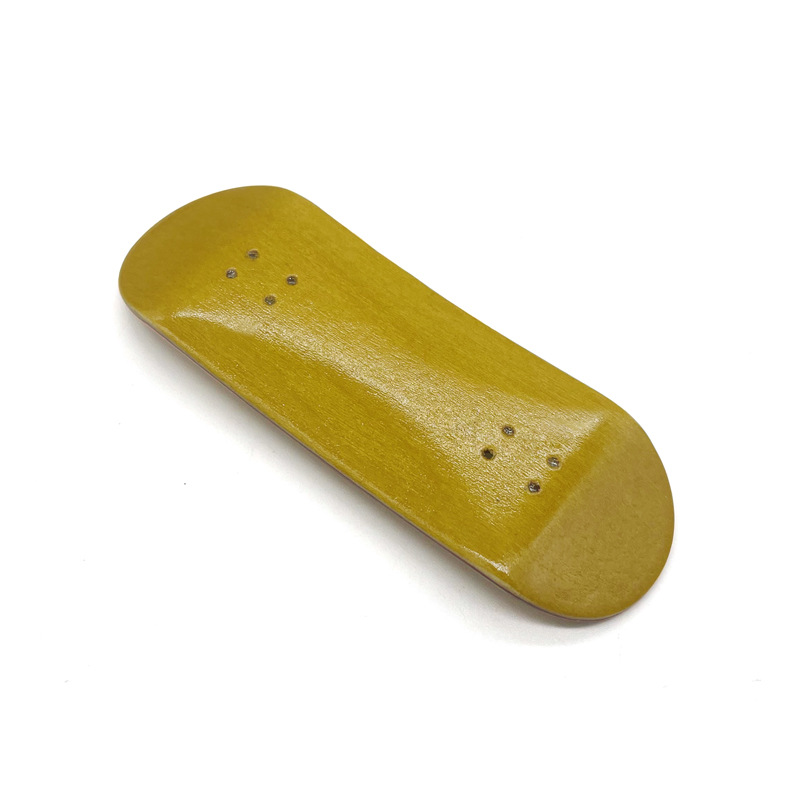
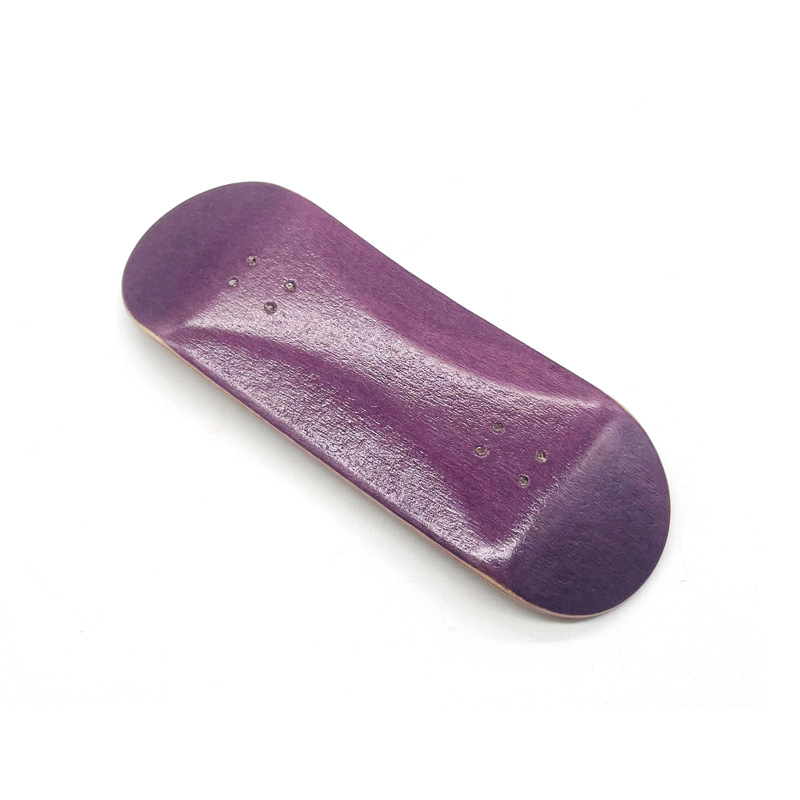


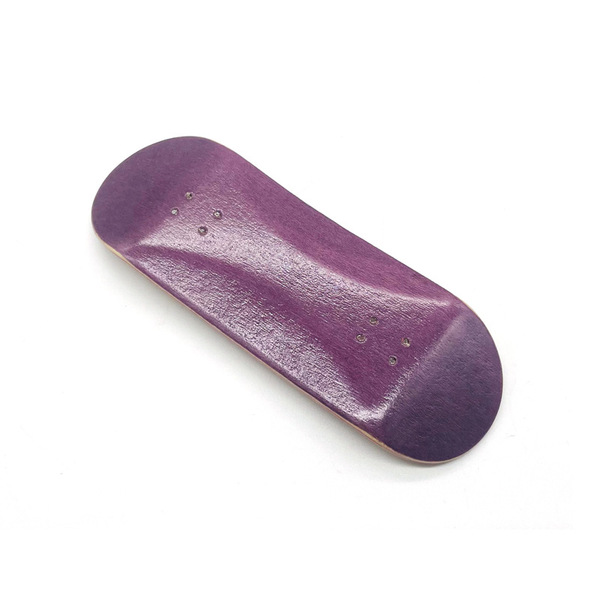
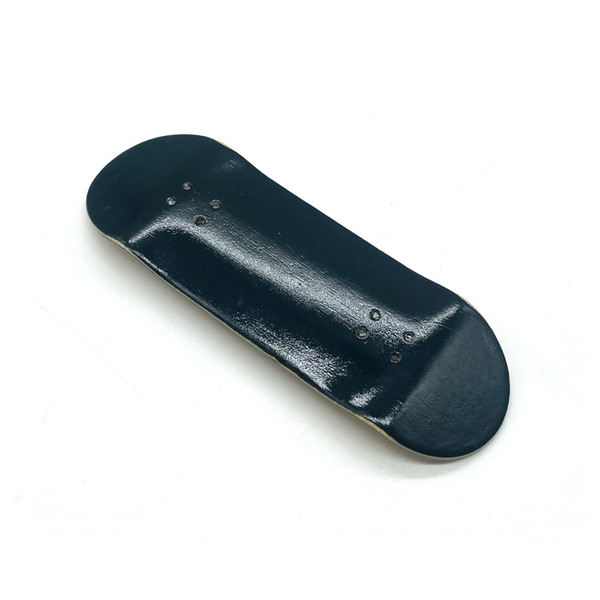
Product: Professional wooden skateboard
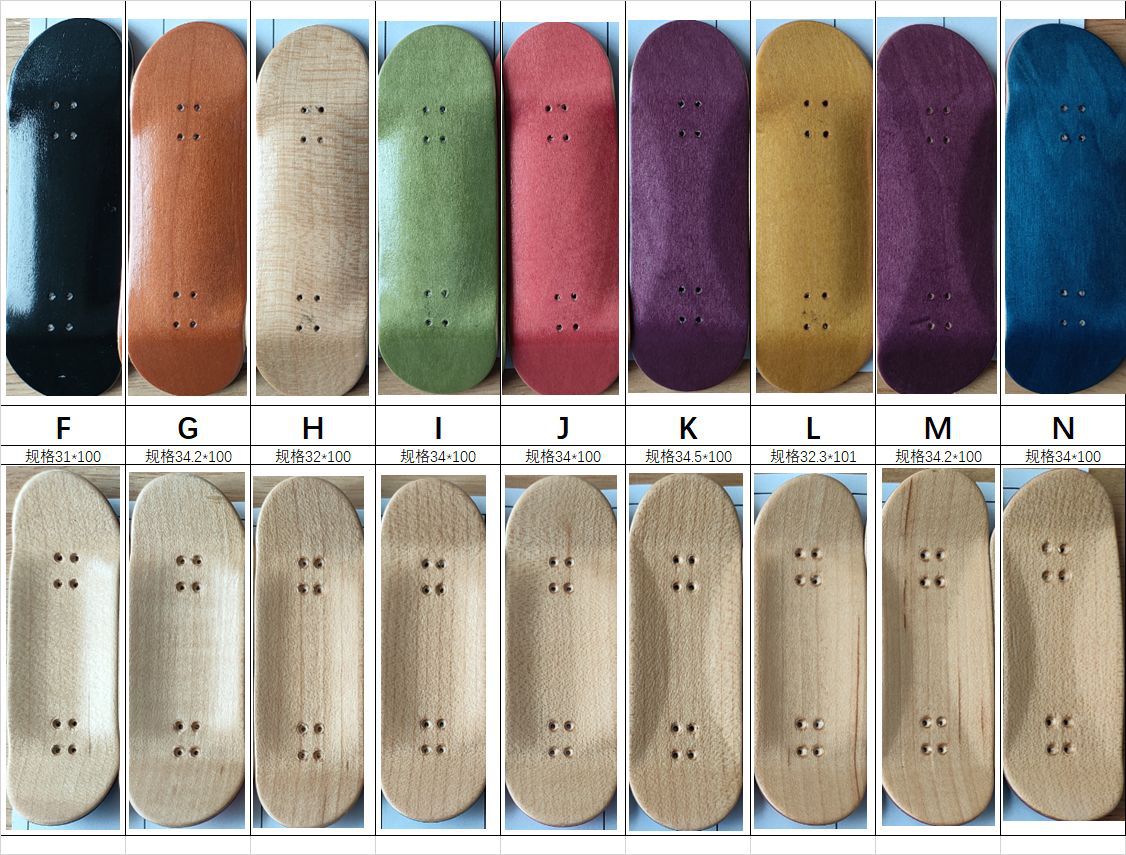
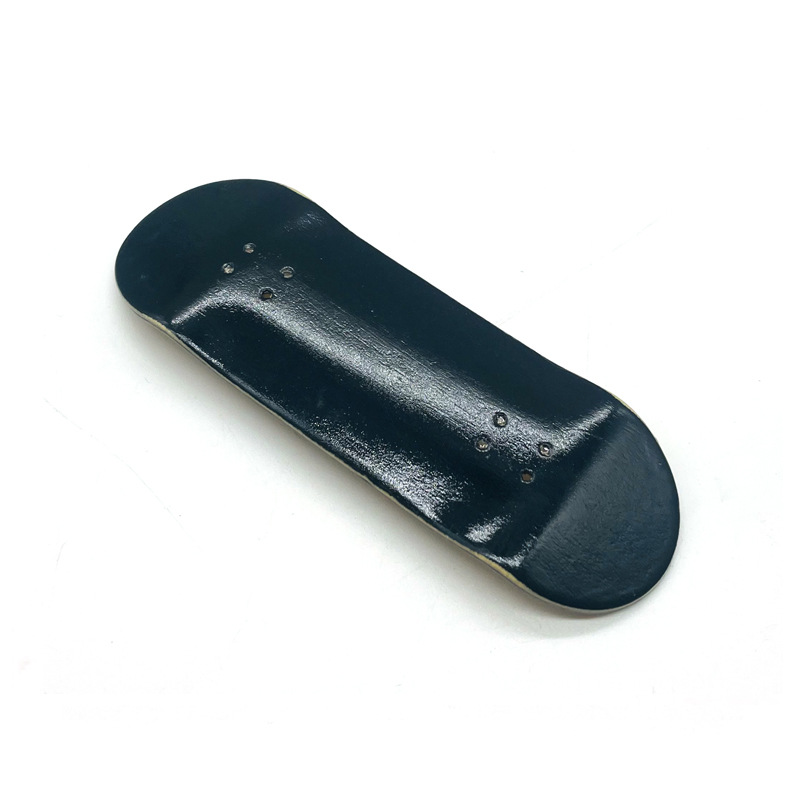
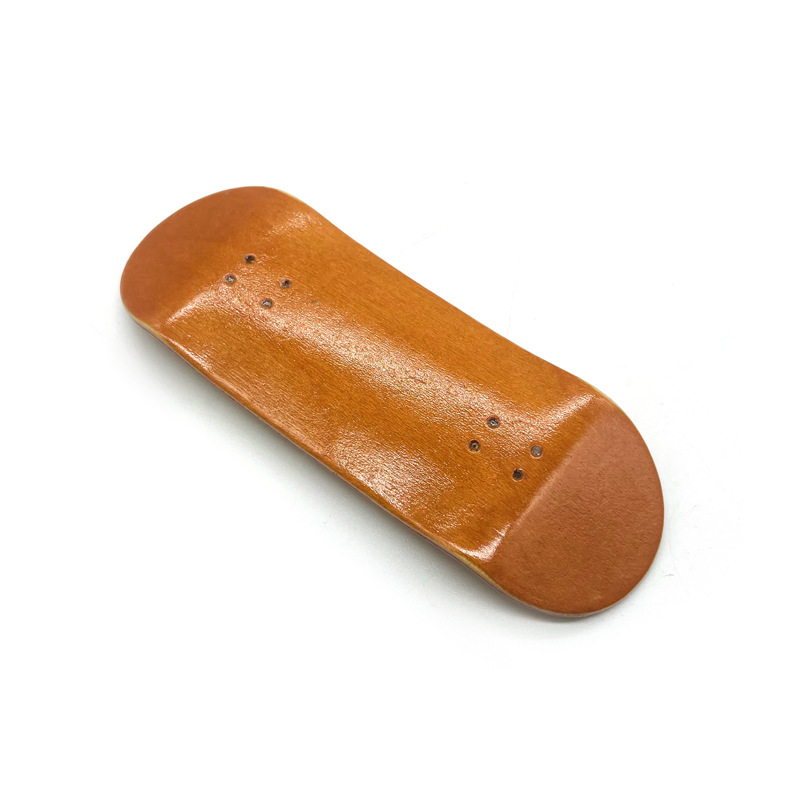
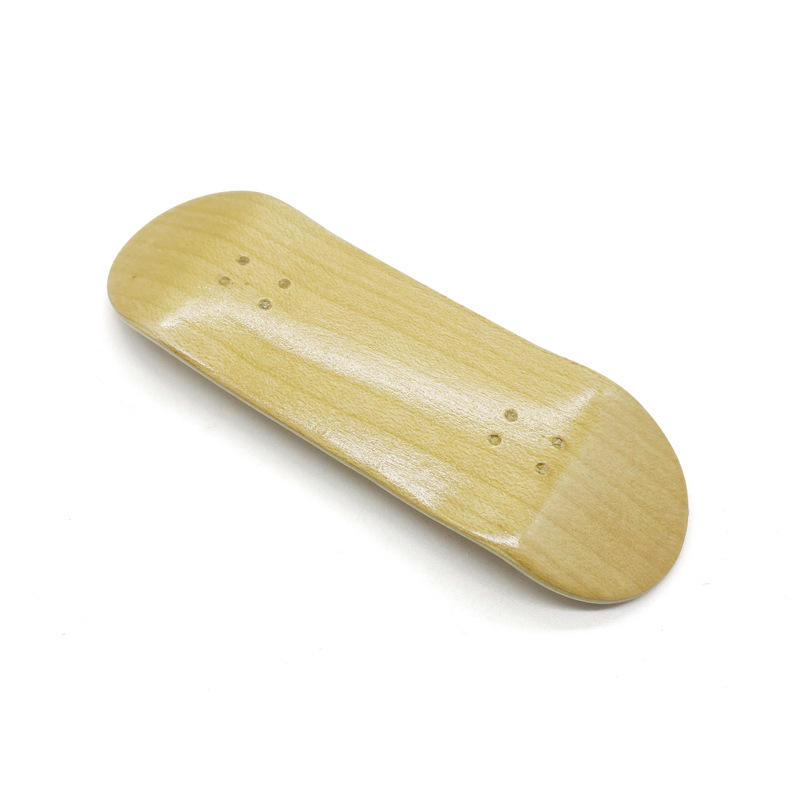
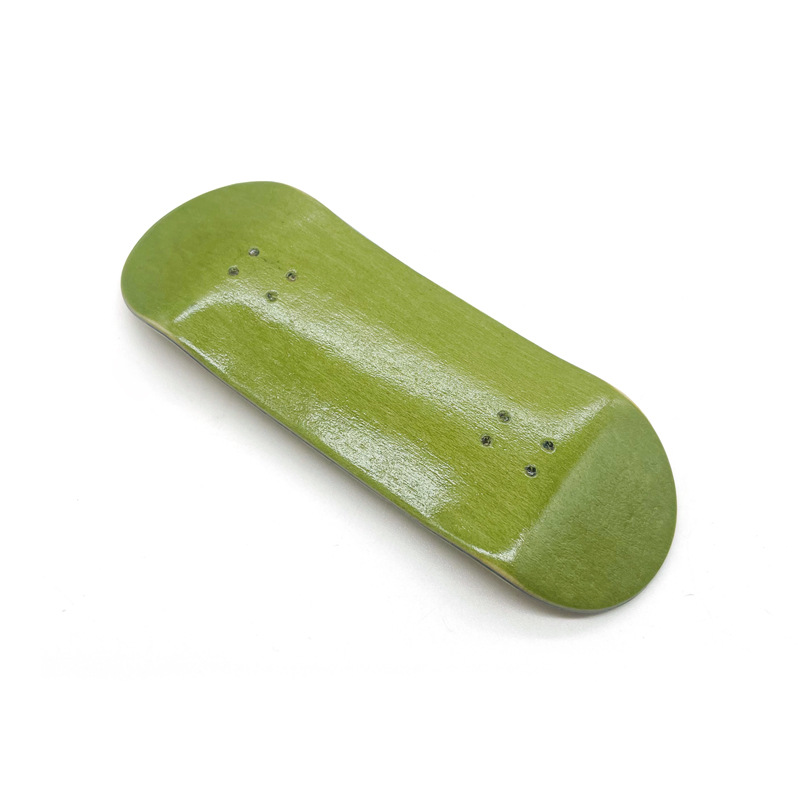
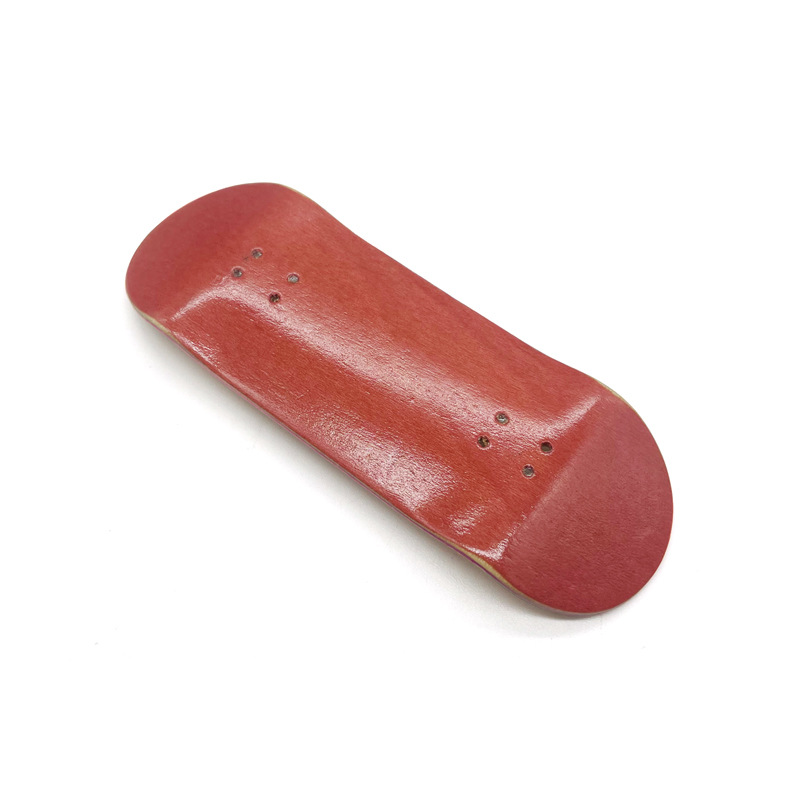
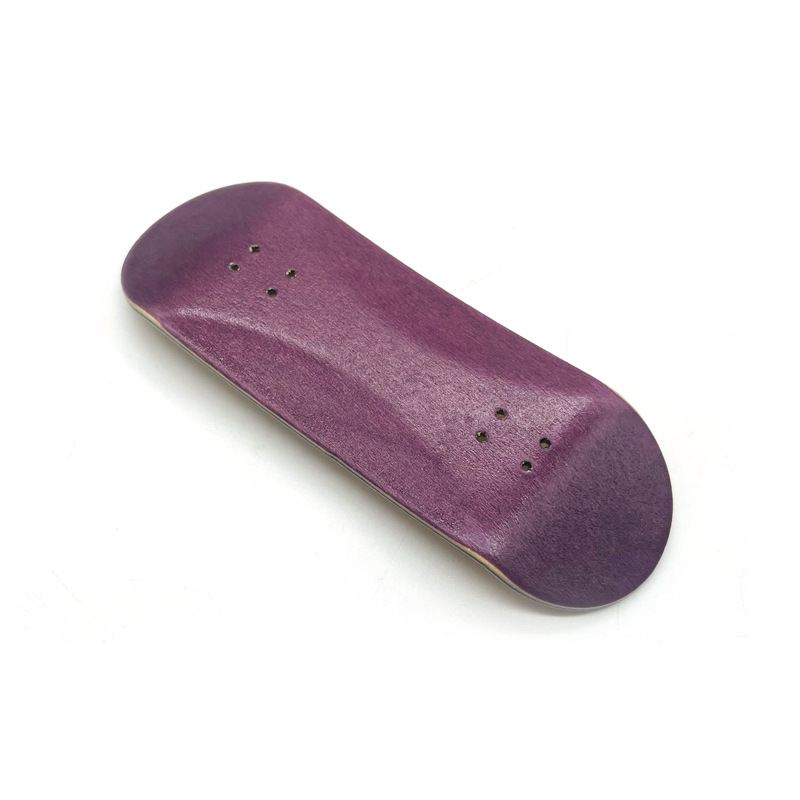
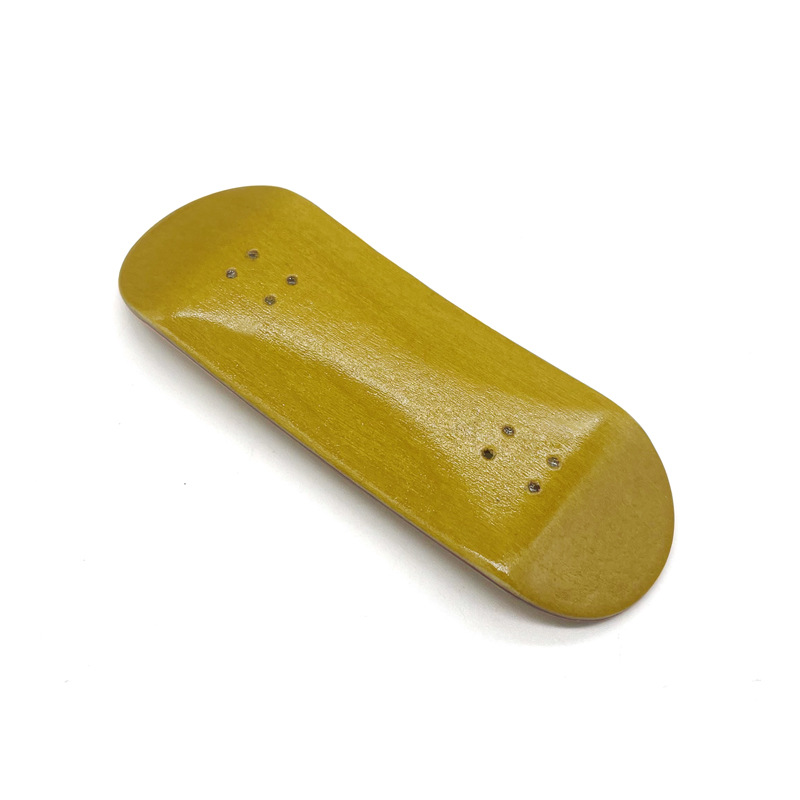
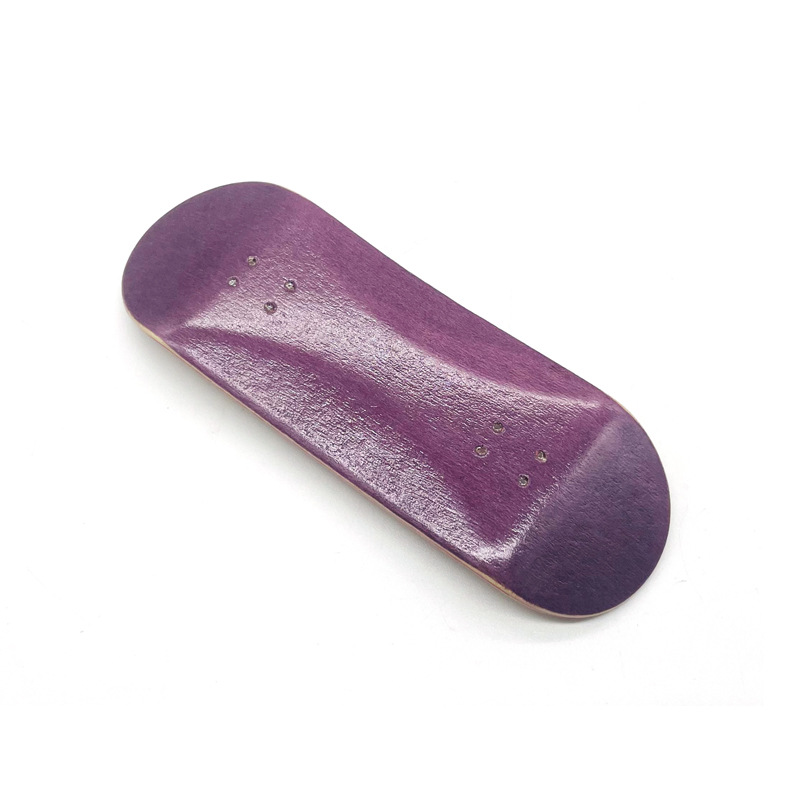
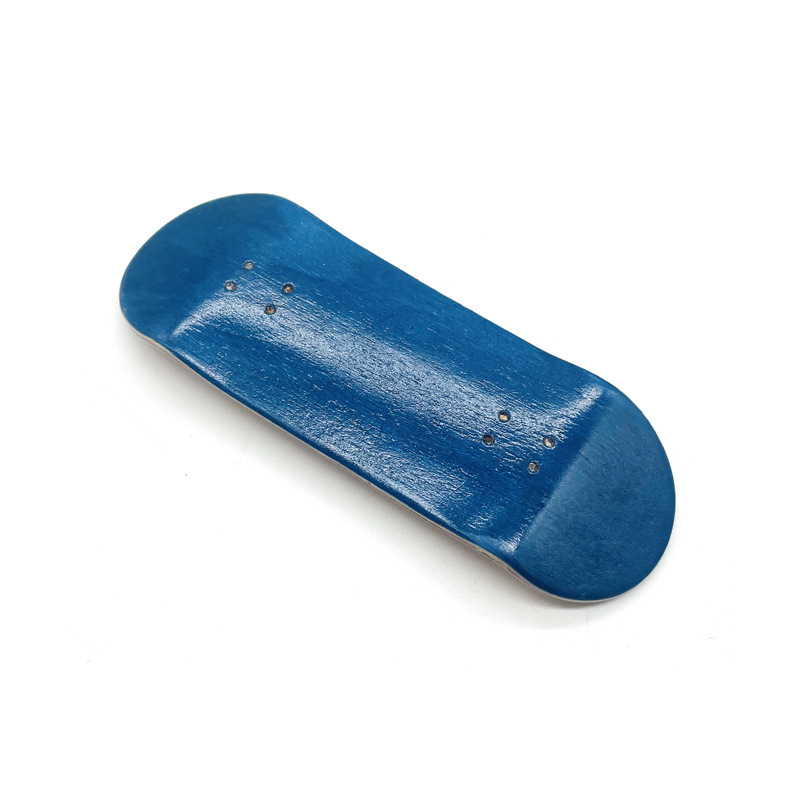
Detailed introduction to the deck of professional finger skateboard:
1. Material:
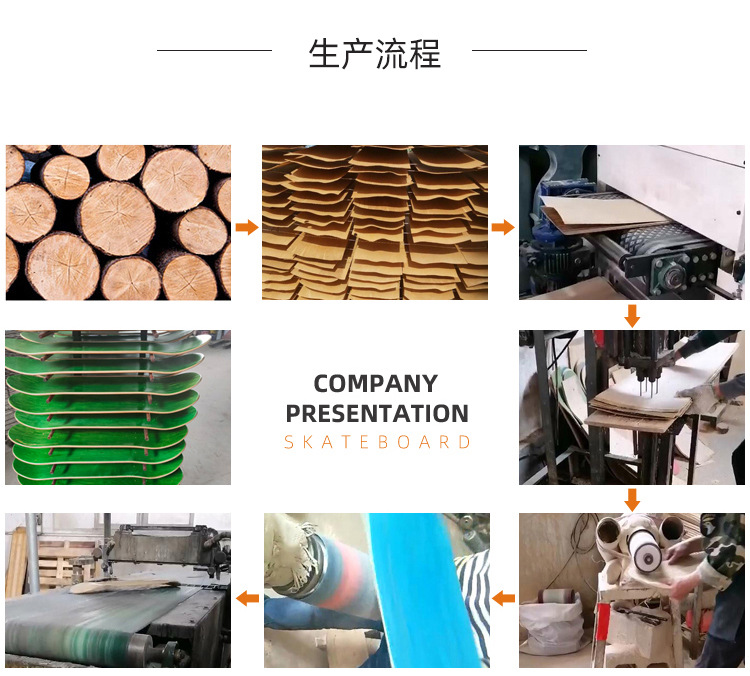
- Maple: Most professional finger skateboard boards are made of multi-layered maple wood, usually 5 layers.The maple wood material has good toughness and elasticity, and can maintain good stability and strength when it withstands various forces exerted by fingers, ensuring that the board will not break or deform easily when players perform various skill moves.For example, maple is a high-quality material for making finger skateboard decks, and its good performance is favored by professional players.
- Other wooden materials: In addition to maple, some professional finger skateboard decks will also use other specially treated wooden materials. These materials may have some unique performances in terms of weight, elasticity, etc. to meet the needs of different players.
2. Process:
- Pressing process: The pressing process of professional boards has an important impact on its performance.The cold pressing process is a relatively advanced pressing method that directly compresses wood chips without adding glue. This process can better retain the natural characteristics of the wood and make the board surface have better impact toughness and elasticity.The hot pressing process uses heat and pressure to bond wood chips together, and its advantage is high production efficiency.
- Paint treatment: High-quality paint treatment can not only make the board look more beautiful, but also protect the wood.The high-grade paint surface has good wear resistance and scratch resistance, which can prevent the board surface from being scratched or worn during daily use, keeping the board surface smooth and flat, making the finger skateboard smoother when gliding.
3. Board type:
- Double rocker type: This is the most common professional finger skateboard type, with both ends slightly tilted.The advantage of this type of board is that when doing various flips, jumps and other technical movements, the head and tail of the board can provide better support and rebound, helping players complete the actions more easily..
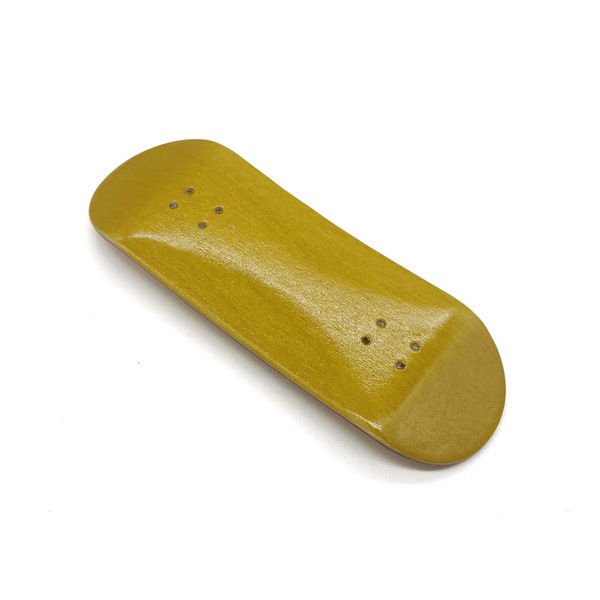
- Shallow concave board type: The board surface has a certain concave curvature, but the degree of depression is shallow.This type of board can increase the contact area between fingers and the board surface, improve the ability of fingers to control the skateboard, and make players more comfortable when doing actions that require precise control.At the same time, shallow concave skateboards also have better stability when sliding.
4. size:
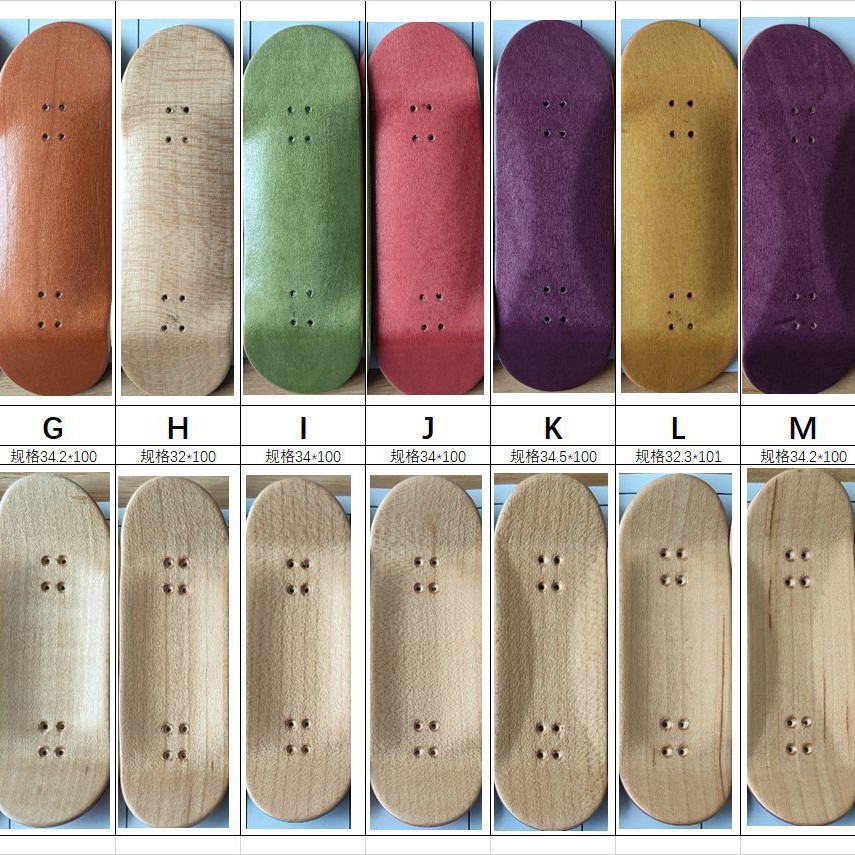
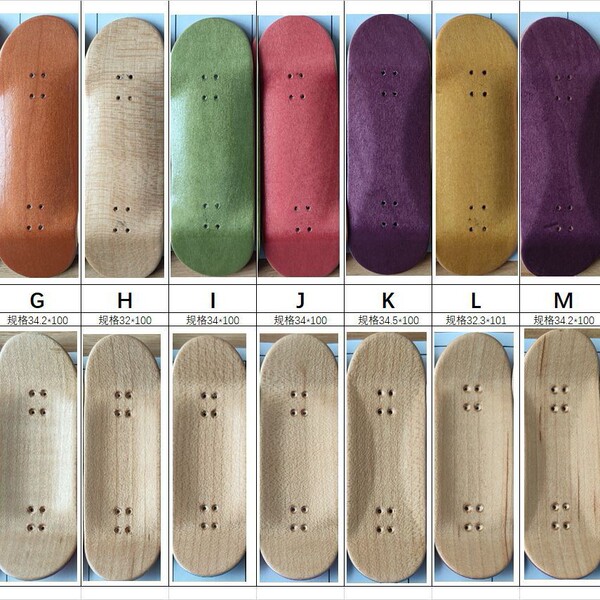
- Length: The board length of professional finger skateboards is generally around 95-102 mm. This length range is suitable for most players’ finger sizes and operating habits. It can ensure flexibility while providing enough space for players to perform various actions.
- Width: The width will vary according to different board types and players' personal preferences, generally around 28-36 mm.Wider decks provide greater stability, while narrower decks are more flexible.
5. Elasticity: The board surface of professional finger skateboards needs to have a certain degree of elasticity, so that when players perform various tricks, the board surface can deform to a certain extent, store energy, and release energy when the action is completed, helping the skateboard complete the action better. The elasticity of the board surface can make the skateboard rotate and move more easily.