
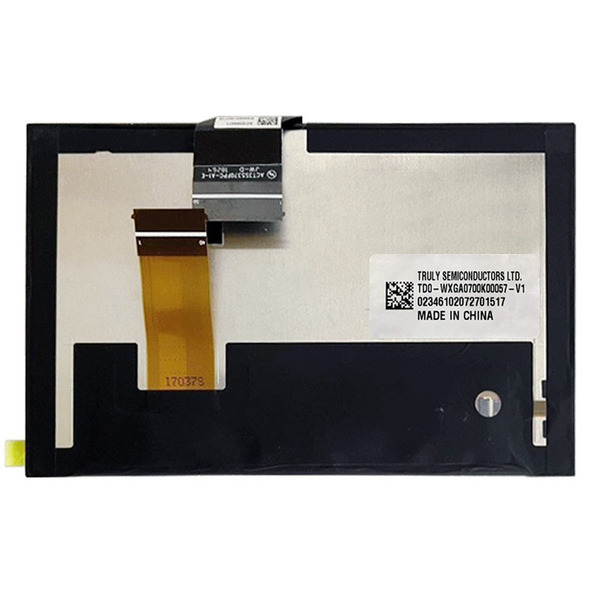
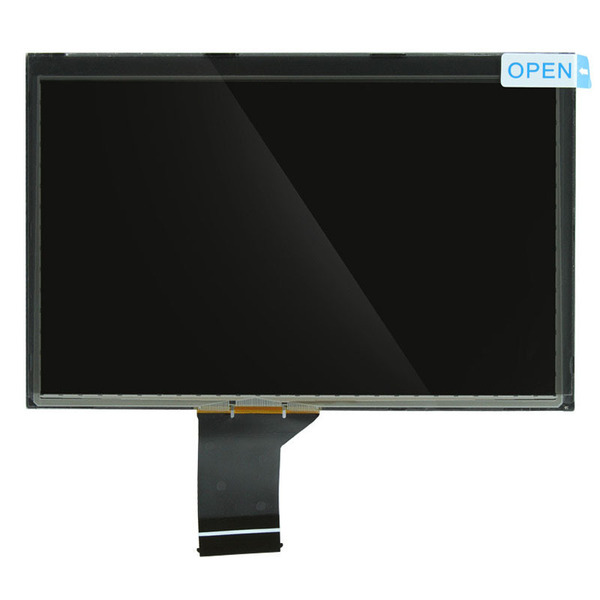
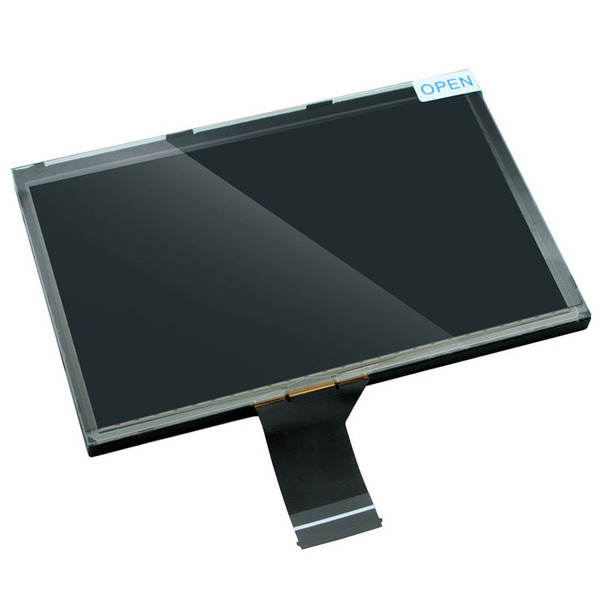
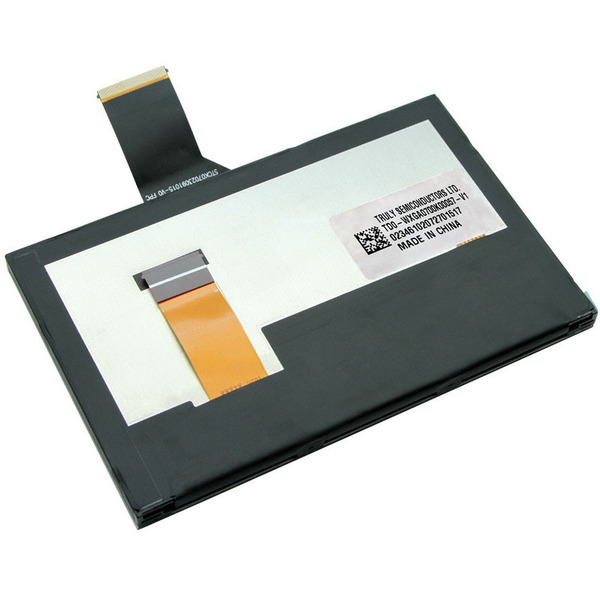
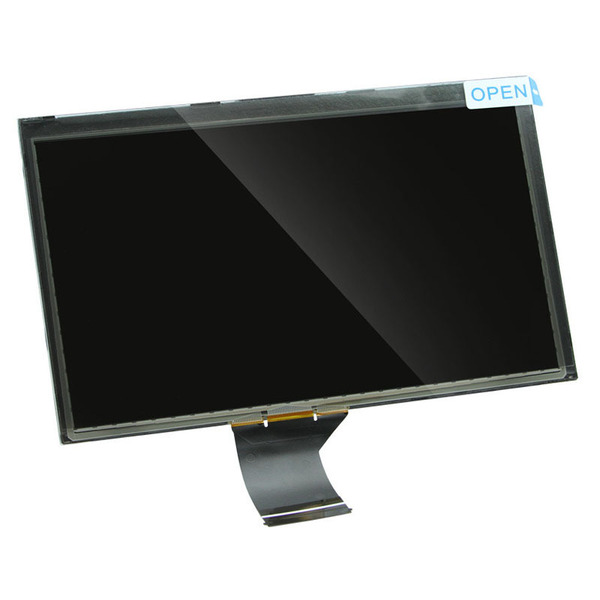


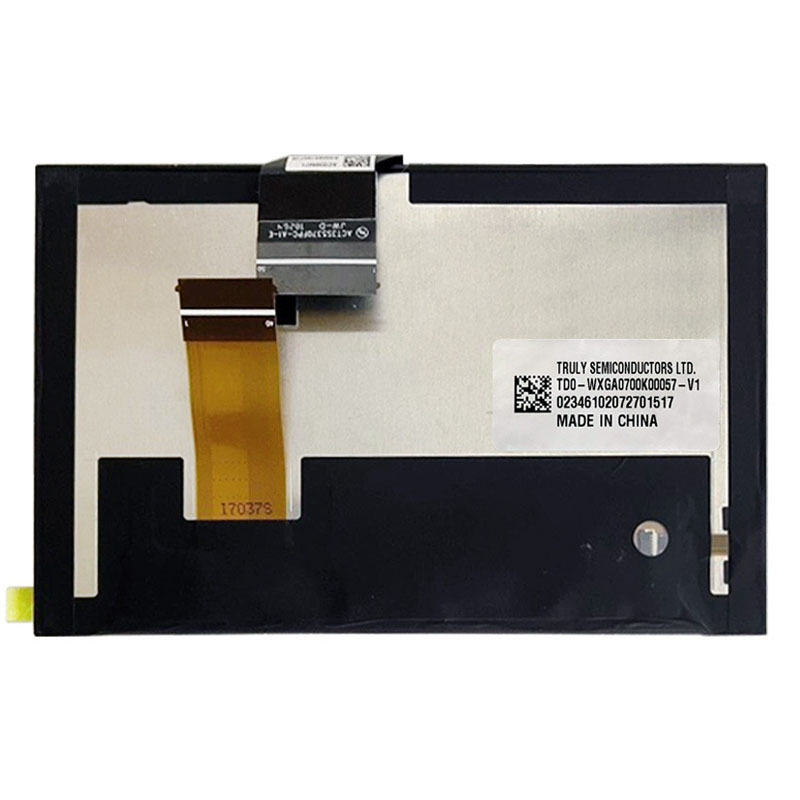
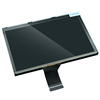
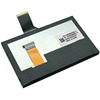
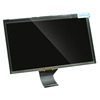
Product: Jeep


1.3Environment Conditions
Project items | Standard | ValueValue |
Operating Temperature |
| -10℃~+60℃, ≤90%RH |
Storage environment (Temperaturepreservation) | -20℃~+70℃, ≤90%RH |
1.4 Mechanical characteristics
Project items | ValueValue |
Finger contact area | Φ≧5mm |
Optical Characteristics | Transmittance: ≥85% |
Surface Hardness | 6H() |
1.5Electrical Characteristics
Project items | ValueValue |
Working voltage | I2C(3.3V) |
Insulation Resistance | > 20M DC25V |
Working current | 12mA~14.5mA |
Response time | ≤12ms |
2Experimental ConditionTesting Condition
2.1 Temperature and humidity rangeTemperature and humidity range
The test is conducted under normal temperature conditions (5℃-35℃), humidity of 45%-85%, and air pressure of 860hPa-1060hPa.When it is necessary to accurately test the product, the test should be carried out in the standard environment: 23℃, 65%RH and 1013hPa, and placed for 24 hours.
In room temperature conditions (5 ℃ - 35 ℃), humidity for 45% - 85%, and barometric pressure test 1060hPa 860hPa - under. Necessary to products accurately, should be in standard test for: 23 ℃, environment and placed 1013hPa 65% RH and 24 hours later, tested.
2.2 Impact Resistance Test Impact Resistance Test
1) Test conditions: When a 64g steel ball is dropped vertically from a height of 80cm onto the center of the surface of a product with a glass thickness of 0.7mm-3.0mm, the glass will not be damaged.
1) Test conditions: when using 64g ball from 80cm height vertical fell on the thickness of the glass is 0.7 mm - 3.0 mm product surface center once, glass won't damaged.
2) Judgment criteria: After the experiment, all characteristics of the product are met, and the change rate is less than 20%.
2) determine the benchmark: after the experiment, and various features meet product is less than 20% changes rate.
2.3 Lead tension bending and heat resistance test Flexible Pattern Bending and Heat Resistance
1) Lead pull force test Flexible pattern heat seal peeling strength:
The lead pull test is performed when the first piece is pressed.
90 degree peeling: The test value is divided by the width of the FPC, and the tensile force value must be greater than or equal to 0.5Kgf/cm. Then it is OK, otherwise it will be rejected.
180 degree peeling: The test value is divided by the width of the FPC. The tensile force value must be greater than or equal to 0.75 Kgf/cm to be considered OK, otherwise it will be rejected.
2) Lead bending resistance test Flexible pattern bending resistance:
The bending radius is 1mm, and it can be bent three times to meet the requirements of electrical performance.
Bending radius of 1mm, bending 3 times, to meet the requirements of electrical performance
3Electrical characteristics test conditionsElectric characteristics
3.1Insulation resistanceInsulation resistance
Use the negative test head of the insulation meter (25V) to press the end of the lead to test the insulation resistance of the product.Make sure the insulation resistance is >20MΩ.
With insulating table (25V) anode test head pressure test the product in the end, lead the insulation impedance. Ensure insulation resistance Ω > 20M.
4 Appearance limit standard1.Purpose:
In order to ensure that the company's product quality has a unified judgment standard and can reach consistency with customers, the production line visual inspection personnel and quality personnel
This specification is specially developed to ensure that the inspectors have something to follow during inspection.
2. Scope of application:2.1 This inspection specification applies to the manufacturing process and finished product inspection of all capacitive screen models of our company.
3. Disadvantage classification definition:
3.1 Critical Defect: Codenamed "CR".
3.1.1 The structure or function of the product does not comply with the relevant laws and regulations in the sales area or has adverse phenomena that threaten customer safety.
3.1.2 The product function fails or the external dimensions exceed the specifications, causing the customer to be unable to install it.
3.2 Major Defect: code-named "MA".
3.2.1 Defects that are sufficient to prevent customers from accepting the product.
3.2.2 Missing parts or errors.
3.2.3 The product loses some of its main functions and does not meet the specification requirements.
3.3 Minor Defect: code-named "MI".
3.3.1 The degree of defectiveness only causes partial deviation in working performance, but is enough to be discovered by customers and used as a reason to be picky and require discounts.
3.3.2 Obvious appearance modification or operation (operation) shortcomings, which can be easily dealt with by ordinary personnel without the need for repair personnel, or which cannot be dealt with but are easily tolerated by ordinary customers.
3.3.3 Compared with standard products, there are slight deviations that are difficult for non-professionals to detect and can often be easily handled or tolerated by customers themselves.
4. Sampling plan:
4.1 In accordance with GB/T2828.1:2003 counting sampling inspection procedures, single sampling for normal inspection is based on Level II level sampling for general inspection.5.Acceptance level:
5.1. Fatal defect (CR): AQL 05.2. Important defect (MA): AQL 0.65 5.3. Minor defect (MI): AQL 1.06.Use equipment/tools
6.1. Desk lamps, ion fans, film rulers, calipers, two-dimensional elements, etc.
Testing method7.1. Under a 27-watt cool white fluorescent desk lamp (illuminance--1000±200LUX);
7.2. Capacitive screen test software tests the electrical function of TP;
7.3. The distance between the human eye and the measured object is 30±5cm, and a black/white background card is used to check the appearance;
7.4. The human eye is 45±15 degrees from the object being measured;
7.5. Inspection environment: Temperature: 20±5℃; Humidity: 60%±10%RH; Cleanliness: Class 10000
7.6. Appearance inspection time: 5-8S.
5 Reliability ConditionsReliability Conditions
5.1 Temperature and Humidity Resistance Test
Store at 60℃, 90% RH for 96 hours, then take it out and meet all electrical parameters at room temperature and humidity.
At 60 ℃, 90% RH conditions 96 hours, remove deposit in normal temperature often wet all electrical parameters meet.
5.2 High temperature storage Heat resistance
Store the product at 70°C for 120 hours, take it out and store it at room temperature for another 24 hours, and it will meet all electrical parameters.
The requirements in 6 shall be satisfied after exposing at 80℃,for 120 Hours and at normal temperature and humidity for 24 hours.
5.3 Thermal Shock
Cycle 100 times under the conditions of -20°C (0.5 hours) → 70°C (0.5 hours), take it out and store it at room temperature and humidity for another 24 hours, and the electrical parameters will be met.
According to - 20 ℃ (0.5 hour) - 70 ℃ (0.5 hour) conditions, take out 100 times in circulation under normal temperature often wet store again after 24 hours, meet the electrical parameters.